Compare commits
81 Commits
| Author | SHA1 | Date | |
|---|---|---|---|

|
31a89d9c84 | ||
|
|
8fa9724398 | ||
|
|
38f3f8ecb9 | ||
|
|
0192aac241 | ||
|
|
e50dc12b0f | ||
|
|
17e6e27a93 | ||
|
|
ab38e2c726 | ||
|
|
77d1e9aa3e | ||
|
|
b0829a8690 | ||
|
|
28d537dde3 | ||
|
|
86bbee71b2 | ||
|
|
0d5347e628 | ||
|
|
ef59aa0227 | ||
|
|
d09659997c | ||
|
|
2b06a952a9 | ||
|
|
e2064a2c05 | ||
|
|
401e17bbdc | ||
|
|
4246792b81 | ||
|
|
658c10e84a | ||
|
|
39d0fdd909 | ||
|
|
c193d9742e | ||
|
|
8e764f355d | ||
|
|
7556ea4213 | ||
|
|
2d2447e210 | ||
|
|
e77dd8de6e | ||
|
|
55da533a87 | ||
|
|
99b3b49241 | ||
|
|
590350f8d0 | ||
|
|
9dd6e47b5b | ||
|
|
94f9f7357e | ||
|
|
fc106ab586 | ||
|
|
1e5fad7433 | ||
|
|
248122a697 | ||
|
|
9572d6a299 | ||
|
|
4ab2550d66 | ||
|
|
6fbfca90b6 | ||
|
|
aae78010e9 | ||
|
|
10968357a1 | ||
|
|
b351e906b6 | ||
|
|
70a13e2a26 | ||
|
|
8ea90a5ce7 | ||
|
|
7adb8686ac | ||
|
|
827b87b9be | ||
|
|
2d30aeb7c6 | ||
|
|
b0e025ade7 | ||
|
|
d8829f9f24 | ||
|
|
b227e3cb82 | ||
|
|
db575eeedc | ||
|
|
941a77f2b8 | ||
|
|
a3d54b83f7 | ||
|
|
a5b45edf2f | ||
|
|
a1a6a549a0 | ||
|
|
e253eba5ed | ||
|
|
f6c0619d89 | ||
|
|
33cf965f72 | ||
|
|
5351469472 | ||
|
|
24630743ce | ||
|
|
2ed84f55b2 | ||
|
|
33d448eb21 | ||
|
|
1466ad713c | ||
|
|
f6d43b03fb | ||
|
|
05a1a21593 | ||
|
|
c45a4dfe6b | ||
|
|
2c2138e811 | ||
|
|
c267415882 | ||
|
|
5433656878 | ||
|
|
f79d1ef42f | ||
|
|
4193b95db0 | ||
|
|
06462a6e79 | ||
|
|
913880c45a | ||
|
|
bdc00eb097 | ||
|
|
ef6ceffc1c | ||
|
|
8c211a96cd | ||
|
|
74b7280049 | ||
|
|
083aa67a0d | ||
|
|
f6072f1e14 | ||
|
|
c2b307dbef | ||
|
|
6de4f104cd | ||
|
|
b223291693 | ||
|
|
516f84f490 | ||
|
|
60ea7f0c2d |
7
.github/CODE_OF_CONDUCT.md
vendored
7
.github/CODE_OF_CONDUCT.md
vendored
@@ -1,3 +1,6 @@
|
||||
Be cordial or be on your way.
|
||||
# Treat each other well
|
||||
|
||||
https://www.kennethreitz.org/essays/be-cordial-or-be-on-your-way
|
||||
Everyone participating in the _requests_ project, and in particular in the issue tracker,
|
||||
pull requests, and social media activity, is expected to treat other people with respect
|
||||
and more generally to follow the guidelines articulated in the
|
||||
[Python Community Code of Conduct](https://www.python.org/psf/codeofconduct/).
|
||||
|
||||
16
.github/ISSUE_TEMPLATE/Bug_report.md
vendored
16
.github/ISSUE_TEMPLATE/Bug_report.md
vendored
@@ -4,15 +4,15 @@ about: Create a report to help us improve
|
||||
|
||||
---
|
||||
|
||||
Summary.
|
||||
<!-- Summary. -->
|
||||
|
||||
## Expected Result
|
||||
|
||||
What you expected.
|
||||
<!-- What you expected. -->
|
||||
|
||||
## Actual Result
|
||||
|
||||
What happened instead.
|
||||
<!-- What happened instead. -->
|
||||
|
||||
## Reproduction Steps
|
||||
|
||||
@@ -25,10 +25,12 @@ import requests
|
||||
|
||||
$ python -m requests.help
|
||||
|
||||
```
|
||||
<paste here>
|
||||
```json
|
||||
{
|
||||
"paste": "here"
|
||||
}
|
||||
```
|
||||
|
||||
This command is only available on Requests v2.16.4 and greater. Otherwise,
|
||||
<!-- This command is only available on Requests v2.16.4 and greater. Otherwise,
|
||||
please provide some basic information about your system (Python version,
|
||||
operating system, &c).
|
||||
operating system, &c). -->
|
||||
|
||||
4
.github/workflows/codeql-analysis.yml
vendored
4
.github/workflows/codeql-analysis.yml
vendored
@@ -7,10 +7,10 @@ name: "CodeQL"
|
||||
|
||||
on:
|
||||
push:
|
||||
branches: [master]
|
||||
branches: [main]
|
||||
pull_request:
|
||||
# The branches below must be a subset of the branches above
|
||||
branches: [master]
|
||||
branches: [main]
|
||||
schedule:
|
||||
- cron: '0 23 * * 0'
|
||||
|
||||
|
||||
18
.github/workflows/lock-issues.yml
vendored
Normal file
18
.github/workflows/lock-issues.yml
vendored
Normal file
@@ -0,0 +1,18 @@
|
||||
name: 'Lock Threads'
|
||||
|
||||
on:
|
||||
schedule:
|
||||
- cron: '0 * * * *'
|
||||
|
||||
permissions:
|
||||
issues: write
|
||||
pull-requests: write
|
||||
|
||||
jobs:
|
||||
action:
|
||||
runs-on: ubuntu-latest
|
||||
steps:
|
||||
- uses: dessant/lock-threads@v2
|
||||
with:
|
||||
issue-lock-inactive-days: 90
|
||||
pr-lock-inactive-days: 90
|
||||
6
.github/workflows/run-tests.yml
vendored
6
.github/workflows/run-tests.yml
vendored
@@ -5,17 +5,19 @@ on: [push, pull_request]
|
||||
jobs:
|
||||
build:
|
||||
runs-on: ${{ matrix.os }}
|
||||
|
||||
timeout-minutes: 10
|
||||
strategy:
|
||||
fail-fast: false
|
||||
matrix:
|
||||
python-version: [2.7, 3.5, 3.6, 3.7, 3.8, 3.9]
|
||||
python-version: ["2.7", "3.6", "3.7", "3.8", "3.9", "3.10"]
|
||||
os: [ubuntu-18.04, macOS-latest, windows-latest]
|
||||
include:
|
||||
# pypy3 on Mac OS currently fails trying to compile
|
||||
# brotlipy. Moving pypy3 to only test linux.
|
||||
- python-version: pypy3
|
||||
os: ubuntu-latest
|
||||
- python-version: pypy-3.7
|
||||
os: ubuntu-latest
|
||||
|
||||
steps:
|
||||
- uses: actions/checkout@v2
|
||||
|
||||
6
.gitignore
vendored
6
.gitignore
vendored
@@ -23,6 +23,12 @@ env/
|
||||
|
||||
.workon
|
||||
|
||||
# in case you work with IntelliJ/PyCharm
|
||||
.idea
|
||||
*.iml
|
||||
.python-version
|
||||
|
||||
|
||||
t.py
|
||||
|
||||
t2.py
|
||||
|
||||
@@ -191,3 +191,4 @@ Patches and Suggestions
|
||||
- "Dull Bananas" <dull.bananas0@gmail.com> (`@dullbananas <https://github.com/dullbananas>`_)
|
||||
- Alessio Izzo (`@aless10 <https://github.com/aless10>`_)
|
||||
- Sylvain Marié (`@smarie <https://github.com/smarie>`_)
|
||||
- Hod Bin Noon (`@hodbn <https://github.com/hodbn>`_)
|
||||
|
||||
124
HISTORY.md
124
HISTORY.md
@@ -4,11 +4,120 @@ Release History
|
||||
dev
|
||||
---
|
||||
|
||||
- \[Short description of non-trivial change.\]
|
||||
- \[Short description of non-trivial change.\]
|
||||
|
||||
2.27.1 (2022-01-05)
|
||||
-------------------
|
||||
|
||||
**Bugfixes**
|
||||
|
||||
- Fixed parsing issue that resulted in the `auth` component being
|
||||
dropped from proxy URLs. (#6028)
|
||||
|
||||
2.27.0 (2022-01-03)
|
||||
-------------------
|
||||
|
||||
**Improvements**
|
||||
|
||||
- Officially added support for Python 3.10. (#5928)
|
||||
|
||||
- Added a `requests.exceptions.JSONDecodeError` to unify JSON exceptions between
|
||||
Python 2 and 3. This gets raised in the `response.json()` method, and is
|
||||
backwards compatible as it inherits from previously thrown exceptions.
|
||||
Can be caught from `requests.exceptions.RequestException` as well. (#5856)
|
||||
|
||||
- Improved error text for misnamed `InvalidSchema` and `MissingSchema`
|
||||
exceptions. This is a temporary fix until exceptions can be renamed
|
||||
(Schema->Scheme). (#6017)
|
||||
|
||||
- Improved proxy parsing for proxy URLs missing a scheme. This will address
|
||||
recent changes to `urlparse` in Python 3.9+. (#5917)
|
||||
|
||||
**Bugfixes**
|
||||
|
||||
- Fixed defect in `extract_zipped_paths` which could result in an infinite loop
|
||||
for some paths. (#5851)
|
||||
|
||||
- Fixed handling for `AttributeError` when calculating length of files obtained
|
||||
by `Tarfile.extractfile()`. (#5239)
|
||||
|
||||
- Fixed urllib3 exception leak, wrapping `urllib3.exceptions.InvalidHeader` with
|
||||
`requests.exceptions.InvalidHeader`. (#5914)
|
||||
|
||||
- Fixed bug where two Host headers were sent for chunked requests. (#5391)
|
||||
|
||||
- Fixed regression in Requests 2.26.0 where `Proxy-Authorization` was
|
||||
incorrectly stripped from all requests sent with `Session.send`. (#5924)
|
||||
|
||||
- Fixed performance regression in 2.26.0 for hosts with a large number of
|
||||
proxies available in the environment. (#5924)
|
||||
|
||||
- Fixed idna exception leak, wrapping `UnicodeError` with
|
||||
`requests.exceptions.InvalidURL` for URLs with a leading dot (.) in the
|
||||
domain. (#5414)
|
||||
|
||||
**Deprecations**
|
||||
|
||||
- Requests support for Python 2.7 and 3.6 will be ending in 2022. While we
|
||||
don't have exact dates, Requests 2.27.x is likely to be the last release
|
||||
series providing support.
|
||||
|
||||
2.26.0 (2021-07-13)
|
||||
-------------------
|
||||
|
||||
**Improvements**
|
||||
|
||||
- Requests now supports Brotli compression, if either the `brotli` or
|
||||
`brotlicffi` package is installed. (#5783)
|
||||
|
||||
- `Session.send` now correctly resolves proxy configurations from both
|
||||
the Session and Request. Behavior now matches `Session.request`. (#5681)
|
||||
|
||||
**Bugfixes**
|
||||
|
||||
- Fixed a race condition in zip extraction when using Requests in parallel
|
||||
from zip archive. (#5707)
|
||||
|
||||
**Dependencies**
|
||||
|
||||
- Instead of `chardet`, use the MIT-licensed `charset_normalizer` for Python3
|
||||
to remove license ambiguity for projects bundling requests. If `chardet`
|
||||
is already installed on your machine it will be used instead of `charset_normalizer`
|
||||
to keep backwards compatibility. (#5797)
|
||||
|
||||
You can also install `chardet` while installing requests by
|
||||
specifying `[use_chardet_on_py3]` extra as follows:
|
||||
|
||||
```shell
|
||||
pip install "requests[use_chardet_on_py3]"
|
||||
```
|
||||
|
||||
Python2 still depends upon the `chardet` module.
|
||||
|
||||
- Requests now supports `idna` 3.x on Python 3. `idna` 2.x will continue to
|
||||
be used on Python 2 installations. (#5711)
|
||||
|
||||
**Deprecations**
|
||||
|
||||
- The `requests[security]` extra has been converted to a no-op install.
|
||||
PyOpenSSL is no longer the recommended secure option for Requests. (#5867)
|
||||
|
||||
- Requests has officially dropped support for Python 3.5. (#5867)
|
||||
|
||||
2.25.1 (2020-12-16)
|
||||
-------------------
|
||||
|
||||
**Bugfixes**
|
||||
|
||||
- Requests now treats `application/json` as `utf8` by default. Resolving
|
||||
inconsistencies between `r.text` and `r.json` output. (#5673)
|
||||
|
||||
**Dependencies**
|
||||
|
||||
- Requests now supports chardet v4.x.
|
||||
|
||||
2.25.0 (2020-11-11)
|
||||
------------------
|
||||
-------------------
|
||||
|
||||
**Improvements**
|
||||
|
||||
@@ -55,7 +164,7 @@ dev
|
||||
**Dependencies**
|
||||
|
||||
- Pinning for `chardet` and `idna` now uses major version instead of minor.
|
||||
This hopefully reduces the need for releases everytime a dependency is updated.
|
||||
This hopefully reduces the need for releases every time a dependency is updated.
|
||||
|
||||
2.22.0 (2019-05-15)
|
||||
-------------------
|
||||
@@ -410,7 +519,7 @@ Or, even better:
|
||||
|
||||
- Fixed regression from 2.12.2 where non-string types were rejected in
|
||||
the basic auth parameters. While support for this behaviour has been
|
||||
readded, the behaviour is deprecated and will be removed in the
|
||||
re-added, the behaviour is deprecated and will be removed in the
|
||||
future.
|
||||
|
||||
2.12.3 (2016-12-01)
|
||||
@@ -1644,12 +1753,12 @@ This is not a backwards compatible change.
|
||||
- Automatic Authentication API Change
|
||||
- Smarter Query URL Parameterization
|
||||
- Allow file uploads and POST data together
|
||||
-
|
||||
-
|
||||
|
||||
New Authentication Manager System
|
||||
|
||||
: - Simpler Basic HTTP System
|
||||
- Supports all build-in urllib2 Auths
|
||||
- Supports all built-in urllib2 Auths
|
||||
- Allows for custom Auth Handlers
|
||||
|
||||
0.2.4 (2011-02-19)
|
||||
@@ -1663,7 +1772,7 @@ This is not a backwards compatible change.
|
||||
0.2.3 (2011-02-15)
|
||||
------------------
|
||||
|
||||
-
|
||||
-
|
||||
|
||||
New HTTPHandling Methods
|
||||
|
||||
@@ -1696,4 +1805,3 @@ This is not a backwards compatible change.
|
||||
|
||||
- Frustration
|
||||
- Conception
|
||||
|
||||
|
||||
2
Makefile
2
Makefile
@@ -4,7 +4,7 @@ init:
|
||||
pip install -r requirements-dev.txt
|
||||
test:
|
||||
# This runs all of the tests, on both Python 2 and Python 3.
|
||||
detox
|
||||
tox -p
|
||||
ci:
|
||||
pytest tests --junitxml=report.xml
|
||||
|
||||
|
||||
34
README.md
34
README.md
@@ -1,10 +1,10 @@
|
||||
# Requests
|
||||
|
||||
**Requests** is a simple, yet elegant HTTP library.
|
||||
**Requests** is a simple, yet elegant, HTTP library.
|
||||
|
||||
```python
|
||||
>>> import requests
|
||||
>>> r = requests.get('https://api.github.com/user', auth=('user', 'pass'))
|
||||
>>> r = requests.get('https://httpbin.org/basic-auth/user/pass', auth=('user', 'pass'))
|
||||
>>> r.status_code
|
||||
200
|
||||
>>> r.headers['content-type']
|
||||
@@ -12,16 +12,16 @@
|
||||
>>> r.encoding
|
||||
'utf-8'
|
||||
>>> r.text
|
||||
'{"type":"User"...'
|
||||
'{"authenticated": true, ...'
|
||||
>>> r.json()
|
||||
{'disk_usage': 368627, 'private_gists': 484, ...}
|
||||
{'authenticated': True, ...}
|
||||
```
|
||||
|
||||
Requests allows you to send HTTP/1.1 requests extremely easily. There’s no need to manually add query strings to your URLs, or to form-encode your `PUT` & `POST` data — but nowadays, just use the `json` method!
|
||||
|
||||
Requests is one of the most downloaded Python package today, pulling in around `14M downloads / week`— according to GitHub, Requests is currently [depended upon](https://github.com/psf/requests/network/dependents?package_id=UGFja2FnZS01NzA4OTExNg%3D%3D) by `500,000+` repositories. You may certainly put your trust in this code.
|
||||
Requests is one of the most downloaded Python packages today, pulling in around `30M downloads / week`— according to GitHub, Requests is currently [depended upon](https://github.com/psf/requests/network/dependents?package_id=UGFja2FnZS01NzA4OTExNg%3D%3D) by `1,000,000+` repositories. You may certainly put your trust in this code.
|
||||
|
||||
[](https://pepy.tech/project/requests/month)
|
||||
[](https://pepy.tech/project/requests)
|
||||
[](https://pypi.org/project/requests)
|
||||
[](https://github.com/psf/requests/graphs/contributors)
|
||||
|
||||
@@ -33,7 +33,7 @@ Requests is available on PyPI:
|
||||
$ python -m pip install requests
|
||||
```
|
||||
|
||||
Requests officially supports Python 2.7 & 3.5+.
|
||||
Requests officially supports Python 2.7 & 3.6+.
|
||||
|
||||
## Supported Features & Best–Practices
|
||||
|
||||
@@ -55,8 +55,24 @@ Requests is ready for the demands of building robust and reliable HTTP–speakin
|
||||
|
||||
## API Reference and User Guide available on [Read the Docs](https://requests.readthedocs.io)
|
||||
|
||||
[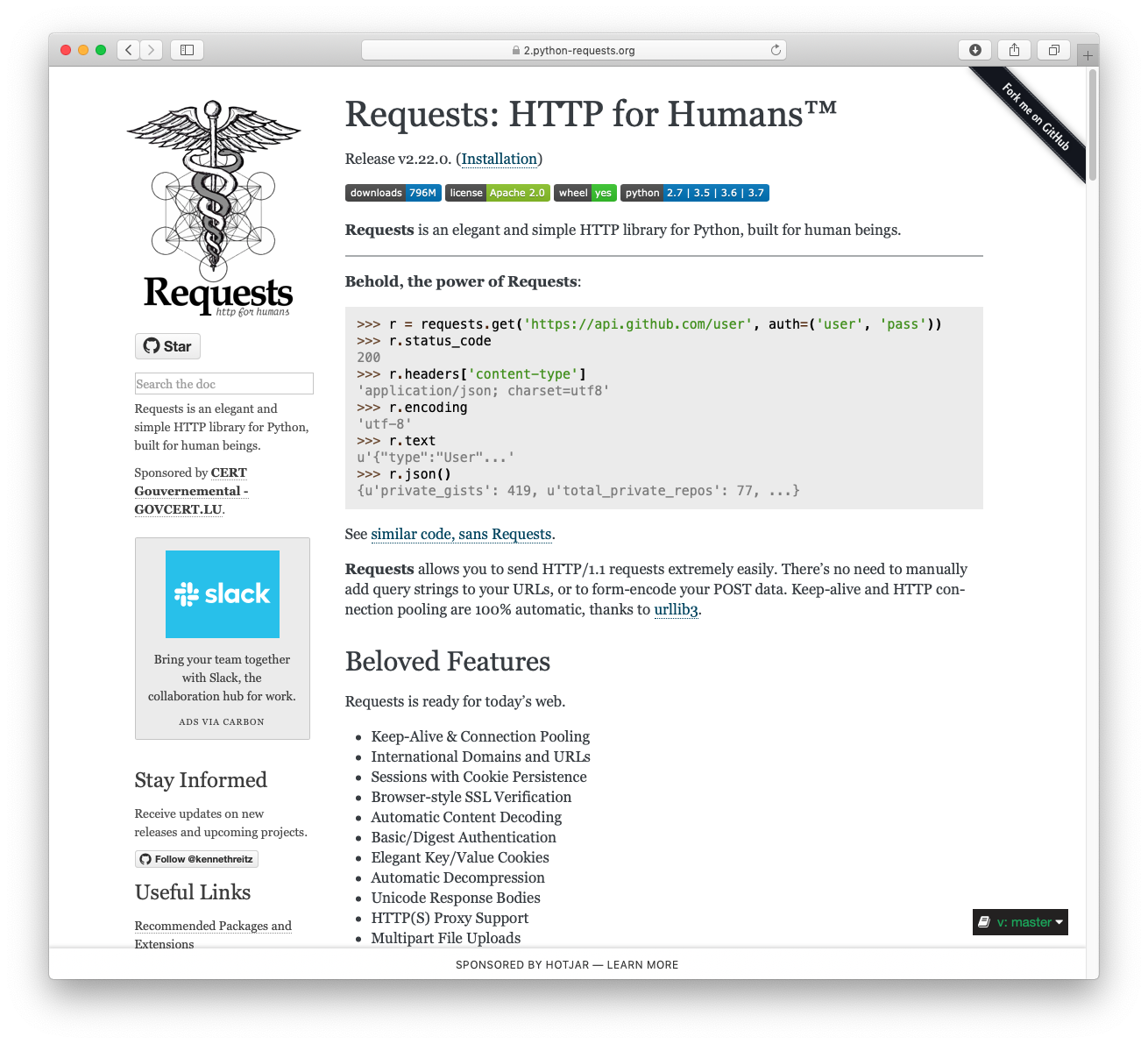](https://requests.readthedocs.io)
|
||||
[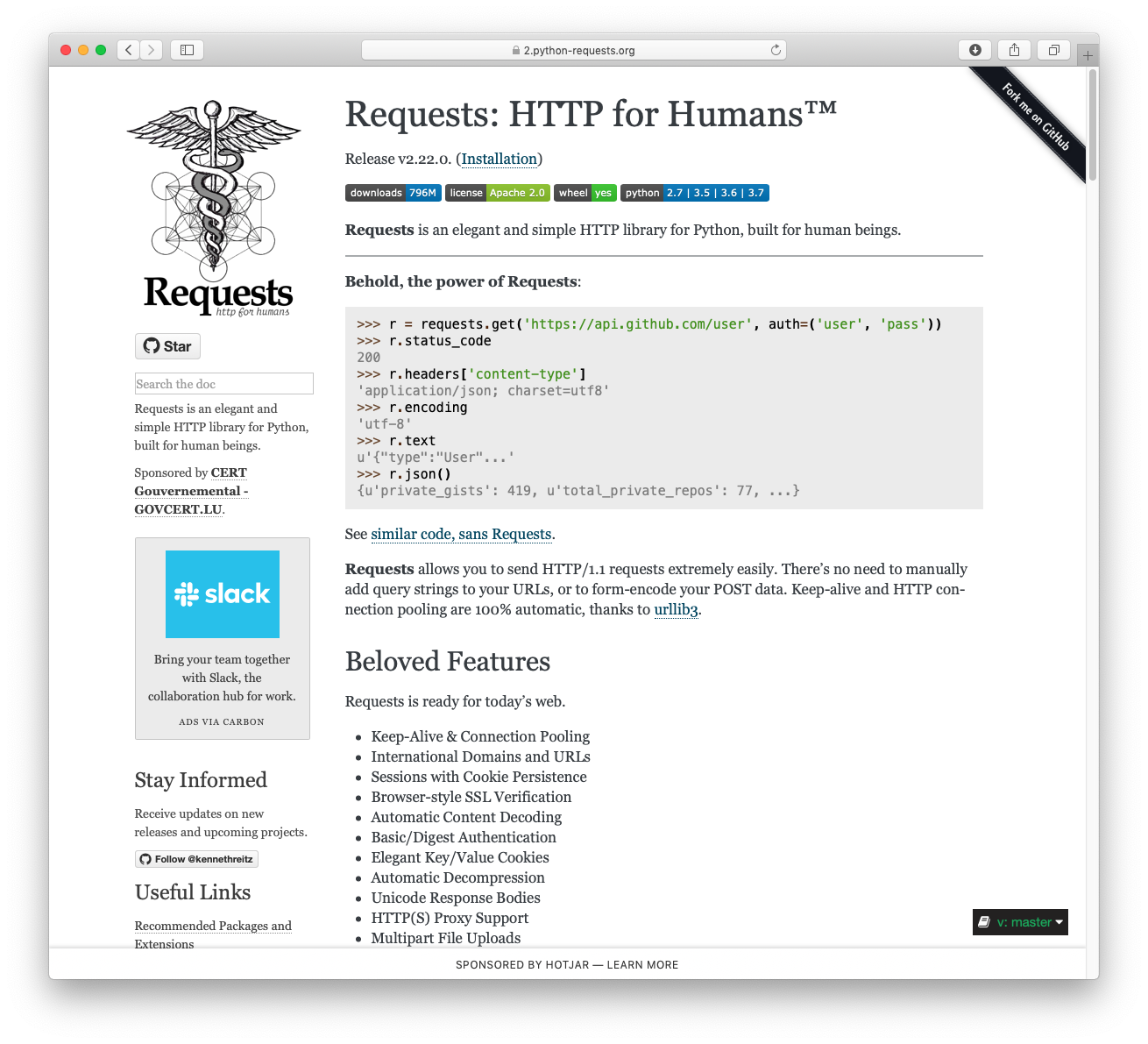](https://requests.readthedocs.io)
|
||||
|
||||
## Cloning the repository
|
||||
|
||||
When cloning the Requests repository, you may need to add the `-c
|
||||
fetch.fsck.badTimezone=ignore` flag to avoid an error about a bad commit (see
|
||||
[this issue](https://github.com/psf/requests/issues/2690) for more background):
|
||||
|
||||
```shell
|
||||
git clone -c fetch.fsck.badTimezone=ignore https://github.com/psf/requests.git
|
||||
```
|
||||
|
||||
You can also apply this setting to your global Git config:
|
||||
|
||||
```shell
|
||||
git config --global fetch.fsck.badTimezone ignore
|
||||
```
|
||||
|
||||
---
|
||||
|
||||
[](https://kennethreitz.org) [](https://www.python.org/psf)
|
||||
[](https://kennethreitz.org) [](https://www.python.org/psf)
|
||||
|
||||
BIN
docs/_static/requests-sidebar.png
vendored
Normal file
BIN
docs/_static/requests-sidebar.png
vendored
Normal file

Binary file not shown.
|
After Width: | Height: | Size: 299 KiB |
6
docs/_templates/sidebarintro.html
vendored
6
docs/_templates/sidebarintro.html
vendored
@@ -1,3 +1,9 @@
|
||||
<p class="logo">
|
||||
<a href="{{ pathto(master_doc) }}">
|
||||
<img class="logo" src="{{ pathto('_static/requests-sidebar.png', 1) }}" alt="Requests logo" />
|
||||
</a>
|
||||
</p>
|
||||
|
||||
<p>
|
||||
<iframe src="https://ghbtns.com/github-btn.html?user=psf&repo=requests&type=watch&count=true&size=large"
|
||||
allowtransparency="true" frameborder="0" scrolling="0" width="200px" height="35px"></iframe>
|
||||
|
||||
@@ -127,7 +127,7 @@ API Changes
|
||||
::
|
||||
|
||||
import requests
|
||||
r = requests.get('https://github.com/timeline.json')
|
||||
r = requests.get('https://api.github.com/events')
|
||||
r.json() # This *call* raises an exception if JSON decoding fails
|
||||
|
||||
* The ``Session`` API has changed. Sessions objects no longer take parameters.
|
||||
@@ -156,7 +156,7 @@ API Changes
|
||||
::
|
||||
|
||||
# in 0.x, passing prefetch=False would accomplish the same thing
|
||||
r = requests.get('https://github.com/timeline.json', stream=True)
|
||||
r = requests.get('https://api.github.com/events', stream=True)
|
||||
for chunk in r.iter_content(8192):
|
||||
...
|
||||
|
||||
|
||||
@@ -11,6 +11,9 @@ Encoded Data?
|
||||
Requests automatically decompresses gzip-encoded responses, and does
|
||||
its best to decode response content to unicode when possible.
|
||||
|
||||
When either the `brotli <https://pypi.org/project/Brotli/>`_ or `brotlicffi <https://pypi.org/project/brotlicffi/>`_
|
||||
package is installed, requests also decodes Brotli-encoded responses.
|
||||
|
||||
You can get direct access to the raw response (and even the socket),
|
||||
if needed as well.
|
||||
|
||||
@@ -19,7 +22,7 @@ Custom User-Agents?
|
||||
-------------------
|
||||
|
||||
Requests allows you to easily override User-Agent strings, along with
|
||||
any other HTTP Header. See `documentation about headers <https://requests.readthedocs.io/en/master/user/quickstart/#custom-headers>`_.
|
||||
any other HTTP Header. See `documentation about headers <https://requests.readthedocs.io/en/latest/user/quickstart/#custom-headers>`_.
|
||||
|
||||
|
||||
|
||||
@@ -52,19 +55,16 @@ Chris Adams gave an excellent summary on
|
||||
Python 3 Support?
|
||||
-----------------
|
||||
|
||||
Yes! Requests officially supports Python 2.7 & 3.5+ and PyPy.
|
||||
Yes! Requests officially supports Python 2.7 & 3.6+ and PyPy.
|
||||
|
||||
Python 2 Support?
|
||||
-----------------
|
||||
|
||||
Yes! We do not have immediate plans to `sunset
|
||||
<https://www.python.org/doc/sunset-python-2/>`_ our support for Python
|
||||
2.7. We understand that we have a large user base with varying needs,
|
||||
and intend to maintain Python 2.7 support within Requests until `pip
|
||||
stops supporting Python 2.7 (there's no estimated date on that yet)
|
||||
<https://pip.pypa.io/en/latest/development/release-process/#python-2-support>`_.
|
||||
Yes! We understand that we have a large user base with varying needs. Through
|
||||
**at least** Requests 2.27.x, we will be providing continued support for Python
|
||||
2.7. However, this support is likely to end some time in 2022.
|
||||
|
||||
That said, it is *highly* recommended users migrate to Python 3.6+ since Python
|
||||
It is *highly* recommended users migrate to Python 3.7+ now since Python
|
||||
2.7 is no longer receiving bug fixes or security updates as of January 1, 2020.
|
||||
|
||||
What are "hostname doesn't match" errors?
|
||||
|
||||
@@ -59,4 +59,4 @@ Betamax
|
||||
`Betamax`_ records your HTTP interactions so the NSA does not have to.
|
||||
A VCR imitation designed only for Python-Requests.
|
||||
|
||||
.. _betamax: https://github.com/sigmavirus24/betamax
|
||||
.. _betamax: https://github.com/betamaxpy/betamax
|
||||
|
||||
@@ -72,7 +72,7 @@ time, to ensure that they are able to promptly release their downstream
|
||||
packages. Currently the list of people we actively contact *ahead of a public
|
||||
release* is:
|
||||
|
||||
- Jeremy Cline, Red Hat (@jeremycline)
|
||||
- Python Maintenance Team, Red Hat (python-maint@redhat.com)
|
||||
- Daniele Tricoli, Debian (@eriol)
|
||||
|
||||
We will notify these individuals at least a week ahead of our planned release
|
||||
|
||||
@@ -34,7 +34,7 @@ including reporting bugs or requesting features. This golden rule is
|
||||
**All contributions are welcome**, as long as
|
||||
everyone involved is treated with respect.
|
||||
|
||||
.. _be cordial or be on your way: https://www.kennethreitz.org/essays/be-cordial-or-be-on-your-way
|
||||
.. _be cordial or be on your way: https://kenreitz.org/essays/2013/01/27/be-cordial-or-be-on-your-way
|
||||
|
||||
.. _early-feedback:
|
||||
|
||||
@@ -78,7 +78,7 @@ When contributing code, you'll want to follow this checklist:
|
||||
4. Make your change.
|
||||
5. Run the entire test suite again, confirming that all tests pass *including
|
||||
the ones you just added*.
|
||||
6. Send a GitHub Pull Request to the main repository's ``master`` branch.
|
||||
6. Send a GitHub Pull Request to the main repository's ``main`` branch.
|
||||
GitHub Pull Requests are the expected method of code collaboration on this
|
||||
project.
|
||||
|
||||
|
||||
@@ -9,17 +9,21 @@ Requests: HTTP for Humans™
|
||||
Release v\ |version|. (:ref:`Installation <install>`)
|
||||
|
||||
|
||||
.. image:: https://pepy.tech/badge/requests
|
||||
.. image:: https://pepy.tech/badge/requests/month
|
||||
:target: https://pepy.tech/project/requests
|
||||
:alt: Requests Downloads Per Month Badge
|
||||
|
||||
.. image:: https://img.shields.io/pypi/l/requests.svg
|
||||
:target: https://pypi.org/project/requests/
|
||||
:alt: License Badge
|
||||
|
||||
.. image:: https://img.shields.io/pypi/wheel/requests.svg
|
||||
:target: https://pypi.org/project/requests/
|
||||
:alt: Wheel Support Badge
|
||||
|
||||
.. image:: https://img.shields.io/pypi/pyversions/requests.svg
|
||||
:target: https://pypi.org/project/requests/
|
||||
:alt: Python Version Support Badge
|
||||
|
||||
**Requests** is an elegant and simple HTTP library for Python, built for human beings.
|
||||
|
||||
@@ -68,7 +72,7 @@ Requests is ready for today's web.
|
||||
- Chunked Requests
|
||||
- ``.netrc`` Support
|
||||
|
||||
Requests officially supports Python 2.7 & 3.5+, and runs great on PyPy.
|
||||
Requests officially supports Python 2.7 & 3.6+, and runs great on PyPy.
|
||||
|
||||
|
||||
The User Guide
|
||||
|
||||
3
docs/requirements.txt
Normal file
3
docs/requirements.txt
Normal file
@@ -0,0 +1,3 @@
|
||||
# Pinning to avoid unexpected breakages.
|
||||
# Used by RTD to generate docs.
|
||||
Sphinx==4.2.0
|
||||
@@ -233,7 +233,7 @@ or persistent::
|
||||
s.verify = '/path/to/certfile'
|
||||
|
||||
.. note:: If ``verify`` is set to a path to a directory, the directory must have been processed using
|
||||
the c_rehash utility supplied with OpenSSL.
|
||||
the ``c_rehash`` utility supplied with OpenSSL.
|
||||
|
||||
This list of trusted CAs can also be specified through the ``REQUESTS_CA_BUNDLE`` environment variable.
|
||||
If ``REQUESTS_CA_BUNDLE`` is not set, ``CURL_CA_BUNDLE`` will be used as fallback.
|
||||
@@ -305,7 +305,7 @@ immediately. You can override this behaviour and defer downloading the response
|
||||
body until you access the :attr:`Response.content <requests.Response.content>`
|
||||
attribute with the ``stream`` parameter::
|
||||
|
||||
tarball_url = 'https://github.com/psf/requests/tarball/master'
|
||||
tarball_url = 'https://github.com/psf/requests/tarball/main'
|
||||
r = requests.get(tarball_url, stream=True)
|
||||
|
||||
At this point only the response headers have been downloaded and the connection
|
||||
@@ -446,7 +446,7 @@ argument.
|
||||
def print_url(r, *args, **kwargs):
|
||||
print(r.url)
|
||||
|
||||
If an error occurs while executing your callback, a warning is given.
|
||||
Your callback function must handle its own exceptions. Any unhandled exception won't be passed silently and thus should be handled by the code calling Requests.
|
||||
|
||||
If the callback function returns a value, it is assumed that it is to
|
||||
replace the data that was passed in. If the function doesn't return
|
||||
@@ -598,7 +598,7 @@ Alternatively you can configure it once for an entire
|
||||
'http': 'http://10.10.1.10:3128',
|
||||
'https': 'http://10.10.1.10:1080',
|
||||
}
|
||||
session = request.Session()
|
||||
session = requests.Session()
|
||||
session.proxies.update(proxies)
|
||||
|
||||
session.get('http://example.org')
|
||||
@@ -626,7 +626,7 @@ syntax in any of the above configuration entries::
|
||||
>>> proxies = {'http': 'http://user:pass@10.10.1.10:3128/'}
|
||||
|
||||
.. warning:: Storing sensitive username and password information in an
|
||||
environment variable or a version-controled file is a security risk and is
|
||||
environment variable or a version-controlled file is a security risk and is
|
||||
highly discouraged.
|
||||
|
||||
To give a proxy for a specific scheme and host, use the
|
||||
@@ -697,10 +697,22 @@ Encodings
|
||||
When you receive a response, Requests makes a guess at the encoding to
|
||||
use for decoding the response when you access the :attr:`Response.text
|
||||
<requests.Response.text>` attribute. Requests will first check for an
|
||||
encoding in the HTTP header, and if none is present, will use `chardet
|
||||
<https://pypi.org/project/chardet/>`_ to attempt to guess the encoding.
|
||||
encoding in the HTTP header, and if none is present, will use
|
||||
`charset_normalizer <https://pypi.org/project/charset_normalizer/>`_
|
||||
or `chardet <https://github.com/chardet/chardet>`_ to attempt to
|
||||
guess the encoding.
|
||||
|
||||
The only time Requests will not do this is if no explicit charset
|
||||
If ``chardet`` is installed, ``requests`` uses it, however for python3
|
||||
``chardet`` is no longer a mandatory dependency. The ``chardet``
|
||||
library is an LGPL-licenced dependency and some users of requests
|
||||
cannot depend on mandatory LGPL-licensed dependencies.
|
||||
|
||||
When you install ``request`` without specifying ``[use_chardet_on_py3]]`` extra,
|
||||
and ``chardet`` is not already installed, ``requests`` uses ``charset-normalizer``
|
||||
(MIT-licensed) to guess the encoding. For Python 2, ``requests`` uses only
|
||||
``chardet`` and is a mandatory dependency there.
|
||||
|
||||
The only time Requests will not guess the encoding is if no explicit charset
|
||||
is present in the HTTP headers **and** the ``Content-Type``
|
||||
header contains ``text``. In this situation, `RFC 2616
|
||||
<https://www.w3.org/Protocols/rfc2616/rfc2616-sec3.html#sec3.7.1>`_ specifies
|
||||
@@ -1005,8 +1017,8 @@ library to use SSLv3::
|
||||
num_pools=connections, maxsize=maxsize,
|
||||
block=block, ssl_version=ssl.PROTOCOL_SSLv3)
|
||||
|
||||
.. _`described here`: https://www.kennethreitz.org/essays/the-future-of-python-http
|
||||
.. _`urllib3`: https://github.com/shazow/urllib3
|
||||
.. _`described here`: https://kenreitz.org/essays/2012/06/14/the-future-of-python-http
|
||||
.. _`urllib3`: https://github.com/urllib3/urllib3
|
||||
|
||||
.. _blocking-or-nonblocking:
|
||||
|
||||
@@ -1025,7 +1037,7 @@ out there that combine Requests with one of Python's asynchronicity frameworks.
|
||||
Some excellent examples are `requests-threads`_, `grequests`_, `requests-futures`_, and `httpx`_.
|
||||
|
||||
.. _`requests-threads`: https://github.com/requests/requests-threads
|
||||
.. _`grequests`: https://github.com/kennethreitz/grequests
|
||||
.. _`grequests`: https://github.com/spyoungtech/grequests
|
||||
.. _`requests-futures`: https://github.com/ross/requests-futures
|
||||
.. _`httpx`: https://github.com/encode/httpx
|
||||
|
||||
|
||||
@@ -19,13 +19,14 @@ the simplest kind, and Requests supports it straight out of the box.
|
||||
Making requests with HTTP Basic Auth is very simple::
|
||||
|
||||
>>> from requests.auth import HTTPBasicAuth
|
||||
>>> requests.get('https://api.github.com/user', auth=HTTPBasicAuth('user', 'pass'))
|
||||
>>> basic = HTTPBasicAuth('user', 'pass')
|
||||
>>> requests.get('https://httpbin.org/basic-auth/user/pass', auth=basic)
|
||||
<Response [200]>
|
||||
|
||||
In fact, HTTP Basic Auth is so common that Requests provides a handy shorthand
|
||||
for using it::
|
||||
|
||||
>>> requests.get('https://api.github.com/user', auth=('user', 'pass'))
|
||||
>>> requests.get('https://httpbin.org/basic-auth/user/pass', auth=('user', 'pass'))
|
||||
<Response [200]>
|
||||
|
||||
Providing the credentials in a tuple like this is exactly the same as the
|
||||
|
||||
@@ -24,9 +24,9 @@ You can either clone the public repository::
|
||||
|
||||
$ git clone git://github.com/psf/requests.git
|
||||
|
||||
Or, download the `tarball <https://github.com/psf/requests/tarball/master>`_::
|
||||
Or, download the `tarball <https://github.com/psf/requests/tarball/main>`_::
|
||||
|
||||
$ curl -OL https://github.com/psf/requests/tarball/master
|
||||
$ curl -OL https://github.com/psf/requests/tarball/main
|
||||
# optionally, zipball is also available (for Windows users).
|
||||
|
||||
Once you have a copy of the source, you can embed it in your own Python
|
||||
|
||||
@@ -37,12 +37,12 @@ get all the information we need from this object.
|
||||
Requests' simple API means that all forms of HTTP request are as obvious. For
|
||||
example, this is how you make an HTTP POST request::
|
||||
|
||||
>>> r = requests.post('https://httpbin.org/post', data = {'key':'value'})
|
||||
>>> r = requests.post('https://httpbin.org/post', data={'key': 'value'})
|
||||
|
||||
Nice, right? What about the other HTTP request types: PUT, DELETE, HEAD and
|
||||
OPTIONS? These are all just as simple::
|
||||
|
||||
>>> r = requests.put('https://httpbin.org/put', data = {'key':'value'})
|
||||
>>> r = requests.put('https://httpbin.org/put', data={'key': 'value'})
|
||||
>>> r = requests.delete('https://httpbin.org/delete')
|
||||
>>> r = requests.head('https://httpbin.org/get')
|
||||
>>> r = requests.options('https://httpbin.org/get')
|
||||
@@ -128,6 +128,9 @@ You can also access the response body as bytes, for non-text requests::
|
||||
|
||||
The ``gzip`` and ``deflate`` transfer-encodings are automatically decoded for you.
|
||||
|
||||
The ``br`` transfer-encoding is automatically decoded for you if a Brotli library
|
||||
like `brotli <https://pypi.org/project/brotli>`_ or `brotlicffi <https://pypi.org/project/brotli>`_ is installed.
|
||||
|
||||
For example, to create an image from binary data returned by a request, you can
|
||||
use the following code::
|
||||
|
||||
@@ -150,7 +153,9 @@ There's also a builtin JSON decoder, in case you're dealing with JSON data::
|
||||
|
||||
In case the JSON decoding fails, ``r.json()`` raises an exception. For example, if
|
||||
the response gets a 204 (No Content), or if the response contains invalid JSON,
|
||||
attempting ``r.json()`` raises ``ValueError: No JSON object could be decoded``.
|
||||
attempting ``r.json()`` raises ``requests.exceptions.JSONDecodeError``. This wrapper exception
|
||||
provides interoperability for multiple exceptions that may be thrown by different
|
||||
python versions and json serialization libraries.
|
||||
|
||||
It should be noted that the success of the call to ``r.json()`` does **not**
|
||||
indicate the success of the response. Some servers may return a JSON object in a
|
||||
@@ -278,8 +283,12 @@ For example, the GitHub API v3 accepts JSON-Encoded POST/PATCH data::
|
||||
|
||||
>>> r = requests.post(url, data=json.dumps(payload))
|
||||
|
||||
Instead of encoding the ``dict`` yourself, you can also pass it directly using
|
||||
the ``json`` parameter (added in version 2.4.2) and it will be encoded automatically::
|
||||
Please note that the above code will NOT add the ``Content-Type`` header
|
||||
(so in particular it will NOT set it to ``application/json``).
|
||||
|
||||
If you need that header set and you don't want to encode the ``dict`` yourself,
|
||||
you can also pass it directly using the ``json`` parameter (added in version 2.4.2)
|
||||
and it will be encoded automatically:
|
||||
|
||||
>>> url = 'https://api.github.com/some/endpoint'
|
||||
>>> payload = {'some': 'data'}
|
||||
@@ -288,8 +297,6 @@ the ``json`` parameter (added in version 2.4.2) and it will be encoded automatic
|
||||
|
||||
Note, the ``json`` parameter is ignored if either ``data`` or ``files`` is passed.
|
||||
|
||||
Using the ``json`` parameter in the request will change the ``Content-Type`` in the header to ``application/json``.
|
||||
|
||||
POST a Multipart-Encoded File
|
||||
-----------------------------
|
||||
|
||||
|
||||
@@ -41,12 +41,20 @@ is at <https://requests.readthedocs.io>.
|
||||
"""
|
||||
|
||||
import urllib3
|
||||
import chardet
|
||||
import warnings
|
||||
from .exceptions import RequestsDependencyWarning
|
||||
|
||||
try:
|
||||
from charset_normalizer import __version__ as charset_normalizer_version
|
||||
except ImportError:
|
||||
charset_normalizer_version = None
|
||||
|
||||
def check_compatibility(urllib3_version, chardet_version):
|
||||
try:
|
||||
from chardet import __version__ as chardet_version
|
||||
except ImportError:
|
||||
chardet_version = None
|
||||
|
||||
def check_compatibility(urllib3_version, chardet_version, charset_normalizer_version):
|
||||
urllib3_version = urllib3_version.split('.')
|
||||
assert urllib3_version != ['dev'] # Verify urllib3 isn't installed from git.
|
||||
|
||||
@@ -62,14 +70,19 @@ def check_compatibility(urllib3_version, chardet_version):
|
||||
assert minor >= 21
|
||||
assert minor <= 26
|
||||
|
||||
# Check chardet for compatibility.
|
||||
major, minor, patch = chardet_version.split('.')[:3]
|
||||
major, minor, patch = int(major), int(minor), int(patch)
|
||||
# chardet >= 3.0.2, < 3.1.0
|
||||
assert major == 3
|
||||
assert minor < 1
|
||||
assert patch >= 2
|
||||
|
||||
# Check charset_normalizer for compatibility.
|
||||
if chardet_version:
|
||||
major, minor, patch = chardet_version.split('.')[:3]
|
||||
major, minor, patch = int(major), int(minor), int(patch)
|
||||
# chardet_version >= 3.0.2, < 5.0.0
|
||||
assert (3, 0, 2) <= (major, minor, patch) < (5, 0, 0)
|
||||
elif charset_normalizer_version:
|
||||
major, minor, patch = charset_normalizer_version.split('.')[:3]
|
||||
major, minor, patch = int(major), int(minor), int(patch)
|
||||
# charset_normalizer >= 2.0.0 < 3.0.0
|
||||
assert (2, 0, 0) <= (major, minor, patch) < (3, 0, 0)
|
||||
else:
|
||||
raise Exception("You need either charset_normalizer or chardet installed")
|
||||
|
||||
def _check_cryptography(cryptography_version):
|
||||
# cryptography < 1.3.4
|
||||
@@ -84,10 +97,10 @@ def _check_cryptography(cryptography_version):
|
||||
|
||||
# Check imported dependencies for compatibility.
|
||||
try:
|
||||
check_compatibility(urllib3.__version__, chardet.__version__)
|
||||
check_compatibility(urllib3.__version__, chardet_version, charset_normalizer_version)
|
||||
except (AssertionError, ValueError):
|
||||
warnings.warn("urllib3 ({}) or chardet ({}) doesn't match a supported "
|
||||
"version!".format(urllib3.__version__, chardet.__version__),
|
||||
warnings.warn("urllib3 ({}) or chardet ({})/charset_normalizer ({}) doesn't match a supported "
|
||||
"version!".format(urllib3.__version__, chardet_version, charset_normalizer_version),
|
||||
RequestsDependencyWarning)
|
||||
|
||||
# Attempt to enable urllib3's fallback for SNI support
|
||||
@@ -126,7 +139,7 @@ from .status_codes import codes
|
||||
from .exceptions import (
|
||||
RequestException, Timeout, URLRequired,
|
||||
TooManyRedirects, HTTPError, ConnectionError,
|
||||
FileModeWarning, ConnectTimeout, ReadTimeout
|
||||
FileModeWarning, ConnectTimeout, ReadTimeout, JSONDecodeError
|
||||
)
|
||||
|
||||
# Set default logging handler to avoid "No handler found" warnings.
|
||||
|
||||
@@ -5,10 +5,10 @@
|
||||
__title__ = 'requests'
|
||||
__description__ = 'Python HTTP for Humans.'
|
||||
__url__ = 'https://requests.readthedocs.io'
|
||||
__version__ = '2.25.0'
|
||||
__build__ = 0x022500
|
||||
__version__ = '2.27.1'
|
||||
__build__ = 0x022701
|
||||
__author__ = 'Kenneth Reitz'
|
||||
__author_email__ = 'me@kennethreitz.org'
|
||||
__license__ = 'Apache 2.0'
|
||||
__copyright__ = 'Copyright 2020 Kenneth Reitz'
|
||||
__copyright__ = 'Copyright 2022 Kenneth Reitz'
|
||||
__cake__ = u'\u2728 \U0001f370 \u2728'
|
||||
|
||||
@@ -19,6 +19,7 @@ from urllib3.util.retry import Retry
|
||||
from urllib3.exceptions import ClosedPoolError
|
||||
from urllib3.exceptions import ConnectTimeoutError
|
||||
from urllib3.exceptions import HTTPError as _HTTPError
|
||||
from urllib3.exceptions import InvalidHeader as _InvalidHeader
|
||||
from urllib3.exceptions import MaxRetryError
|
||||
from urllib3.exceptions import NewConnectionError
|
||||
from urllib3.exceptions import ProxyError as _ProxyError
|
||||
@@ -37,7 +38,7 @@ from .structures import CaseInsensitiveDict
|
||||
from .cookies import extract_cookies_to_jar
|
||||
from .exceptions import (ConnectionError, ConnectTimeout, ReadTimeout, SSLError,
|
||||
ProxyError, RetryError, InvalidSchema, InvalidProxyURL,
|
||||
InvalidURL)
|
||||
InvalidURL, InvalidHeader)
|
||||
from .auth import _basic_auth_str
|
||||
|
||||
try:
|
||||
@@ -457,9 +458,11 @@ class HTTPAdapter(BaseAdapter):
|
||||
low_conn = conn._get_conn(timeout=DEFAULT_POOL_TIMEOUT)
|
||||
|
||||
try:
|
||||
skip_host = 'Host' in request.headers
|
||||
low_conn.putrequest(request.method,
|
||||
url,
|
||||
skip_accept_encoding=True)
|
||||
skip_accept_encoding=True,
|
||||
skip_host=skip_host)
|
||||
|
||||
for header, value in request.headers.items():
|
||||
low_conn.putheader(header, value)
|
||||
@@ -527,6 +530,8 @@ class HTTPAdapter(BaseAdapter):
|
||||
raise SSLError(e, request=request)
|
||||
elif isinstance(e, ReadTimeoutError):
|
||||
raise ReadTimeout(e, request=request)
|
||||
elif isinstance(e, _InvalidHeader):
|
||||
raise InvalidHeader(e, request=request)
|
||||
else:
|
||||
raise
|
||||
|
||||
|
||||
@@ -72,7 +72,6 @@ def get(url, params=None, **kwargs):
|
||||
:rtype: requests.Response
|
||||
"""
|
||||
|
||||
kwargs.setdefault('allow_redirects', True)
|
||||
return request('get', url, params=params, **kwargs)
|
||||
|
||||
|
||||
@@ -85,7 +84,6 @@ def options(url, **kwargs):
|
||||
:rtype: requests.Response
|
||||
"""
|
||||
|
||||
kwargs.setdefault('allow_redirects', True)
|
||||
return request('options', url, **kwargs)
|
||||
|
||||
|
||||
|
||||
@@ -8,7 +8,10 @@ This module handles import compatibility issues between Python 2 and
|
||||
Python 3.
|
||||
"""
|
||||
|
||||
import chardet
|
||||
try:
|
||||
import chardet
|
||||
except ImportError:
|
||||
import charset_normalizer as chardet
|
||||
|
||||
import sys
|
||||
|
||||
@@ -25,8 +28,10 @@ is_py2 = (_ver[0] == 2)
|
||||
#: Python 3.x?
|
||||
is_py3 = (_ver[0] == 3)
|
||||
|
||||
has_simplejson = False
|
||||
try:
|
||||
import simplejson as json
|
||||
has_simplejson = True
|
||||
except ImportError:
|
||||
import json
|
||||
|
||||
@@ -46,13 +51,13 @@ if is_py2:
|
||||
# Keep OrderedDict for backwards compatibility.
|
||||
from collections import Callable, Mapping, MutableMapping, OrderedDict
|
||||
|
||||
|
||||
builtin_str = str
|
||||
bytes = str
|
||||
str = unicode
|
||||
basestring = basestring
|
||||
numeric_types = (int, long, float)
|
||||
integer_types = (int, long)
|
||||
JSONDecodeError = ValueError
|
||||
|
||||
elif is_py3:
|
||||
from urllib.parse import urlparse, urlunparse, urljoin, urlsplit, urlencode, quote, unquote, quote_plus, unquote_plus, urldefrag
|
||||
@@ -63,6 +68,10 @@ elif is_py3:
|
||||
# Keep OrderedDict for backwards compatibility.
|
||||
from collections import OrderedDict
|
||||
from collections.abc import Callable, Mapping, MutableMapping
|
||||
if has_simplejson:
|
||||
from simplejson import JSONDecodeError
|
||||
else:
|
||||
from json import JSONDecodeError
|
||||
|
||||
builtin_str = str
|
||||
str = str
|
||||
|
||||
@@ -8,6 +8,8 @@ This module contains the set of Requests' exceptions.
|
||||
"""
|
||||
from urllib3.exceptions import HTTPError as BaseHTTPError
|
||||
|
||||
from .compat import JSONDecodeError as CompatJSONDecodeError
|
||||
|
||||
|
||||
class RequestException(IOError):
|
||||
"""There was an ambiguous exception that occurred while handling your
|
||||
@@ -25,6 +27,14 @@ class RequestException(IOError):
|
||||
super(RequestException, self).__init__(*args, **kwargs)
|
||||
|
||||
|
||||
class InvalidJSONError(RequestException):
|
||||
"""A JSON error occurred."""
|
||||
|
||||
|
||||
class JSONDecodeError(InvalidJSONError, CompatJSONDecodeError):
|
||||
"""Couldn't decode the text into json"""
|
||||
|
||||
|
||||
class HTTPError(RequestException):
|
||||
"""An HTTP error occurred."""
|
||||
|
||||
@@ -70,11 +80,11 @@ class TooManyRedirects(RequestException):
|
||||
|
||||
|
||||
class MissingSchema(RequestException, ValueError):
|
||||
"""The URL schema (e.g. http or https) is missing."""
|
||||
"""The URL scheme (e.g. http or https) is missing."""
|
||||
|
||||
|
||||
class InvalidSchema(RequestException, ValueError):
|
||||
"""See defaults.py for valid schemas."""
|
||||
"""The URL scheme provided is either invalid or unsupported."""
|
||||
|
||||
|
||||
class InvalidURL(RequestException, ValueError):
|
||||
|
||||
@@ -8,10 +8,19 @@ import ssl
|
||||
|
||||
import idna
|
||||
import urllib3
|
||||
import chardet
|
||||
|
||||
from . import __version__ as requests_version
|
||||
|
||||
try:
|
||||
import charset_normalizer
|
||||
except ImportError:
|
||||
charset_normalizer = None
|
||||
|
||||
try:
|
||||
import chardet
|
||||
except ImportError:
|
||||
chardet = None
|
||||
|
||||
try:
|
||||
from urllib3.contrib import pyopenssl
|
||||
except ImportError:
|
||||
@@ -71,7 +80,12 @@ def info():
|
||||
|
||||
implementation_info = _implementation()
|
||||
urllib3_info = {'version': urllib3.__version__}
|
||||
chardet_info = {'version': chardet.__version__}
|
||||
charset_normalizer_info = {'version': None}
|
||||
chardet_info = {'version': None}
|
||||
if charset_normalizer:
|
||||
charset_normalizer_info = {'version': charset_normalizer.__version__}
|
||||
if chardet:
|
||||
chardet_info = {'version': chardet.__version__}
|
||||
|
||||
pyopenssl_info = {
|
||||
'version': None,
|
||||
@@ -99,9 +113,11 @@ def info():
|
||||
'implementation': implementation_info,
|
||||
'system_ssl': system_ssl_info,
|
||||
'using_pyopenssl': pyopenssl is not None,
|
||||
'using_charset_normalizer': chardet is None,
|
||||
'pyOpenSSL': pyopenssl_info,
|
||||
'urllib3': urllib3_info,
|
||||
'chardet': chardet_info,
|
||||
'charset_normalizer': charset_normalizer_info,
|
||||
'cryptography': cryptography_info,
|
||||
'idna': idna_info,
|
||||
'requests': {
|
||||
|
||||
@@ -29,7 +29,9 @@ from .auth import HTTPBasicAuth
|
||||
from .cookies import cookiejar_from_dict, get_cookie_header, _copy_cookie_jar
|
||||
from .exceptions import (
|
||||
HTTPError, MissingSchema, InvalidURL, ChunkedEncodingError,
|
||||
ContentDecodingError, ConnectionError, StreamConsumedError)
|
||||
ContentDecodingError, ConnectionError, StreamConsumedError,
|
||||
InvalidJSONError)
|
||||
from .exceptions import JSONDecodeError as RequestsJSONDecodeError
|
||||
from ._internal_utils import to_native_string, unicode_is_ascii
|
||||
from .utils import (
|
||||
guess_filename, get_auth_from_url, requote_uri,
|
||||
@@ -38,7 +40,7 @@ from .utils import (
|
||||
from .compat import (
|
||||
Callable, Mapping,
|
||||
cookielib, urlunparse, urlsplit, urlencode, str, bytes,
|
||||
is_py2, chardet, builtin_str, basestring)
|
||||
is_py2, chardet, builtin_str, basestring, JSONDecodeError)
|
||||
from .compat import json as complexjson
|
||||
from .status_codes import codes
|
||||
|
||||
@@ -384,7 +386,7 @@ class PreparedRequest(RequestEncodingMixin, RequestHooksMixin):
|
||||
raise InvalidURL(*e.args)
|
||||
|
||||
if not scheme:
|
||||
error = ("Invalid URL {0!r}: No schema supplied. Perhaps you meant http://{0}?")
|
||||
error = ("Invalid URL {0!r}: No scheme supplied. Perhaps you meant http://{0}?")
|
||||
error = error.format(to_native_string(url, 'utf8'))
|
||||
|
||||
raise MissingSchema(error)
|
||||
@@ -401,7 +403,7 @@ class PreparedRequest(RequestEncodingMixin, RequestHooksMixin):
|
||||
host = self._get_idna_encoded_host(host)
|
||||
except UnicodeError:
|
||||
raise InvalidURL('URL has an invalid label.')
|
||||
elif host.startswith(u'*'):
|
||||
elif host.startswith((u'*', u'.')):
|
||||
raise InvalidURL('URL has an invalid label.')
|
||||
|
||||
# Carefully reconstruct the network location
|
||||
@@ -466,7 +468,12 @@ class PreparedRequest(RequestEncodingMixin, RequestHooksMixin):
|
||||
# urllib3 requires a bytes-like body. Python 2's json.dumps
|
||||
# provides this natively, but Python 3 gives a Unicode string.
|
||||
content_type = 'application/json'
|
||||
body = complexjson.dumps(json)
|
||||
|
||||
try:
|
||||
body = complexjson.dumps(json, allow_nan=False)
|
||||
except ValueError as ve:
|
||||
raise InvalidJSONError(ve, request=self)
|
||||
|
||||
if not isinstance(body, bytes):
|
||||
body = body.encode('utf-8')
|
||||
|
||||
@@ -726,7 +733,7 @@ class Response(object):
|
||||
|
||||
@property
|
||||
def apparent_encoding(self):
|
||||
"""The apparent encoding, provided by the chardet library."""
|
||||
"""The apparent encoding, provided by the charset_normalizer or chardet libraries."""
|
||||
return chardet.detect(self.content)['encoding']
|
||||
|
||||
def iter_content(self, chunk_size=1, decode_unicode=False):
|
||||
@@ -840,7 +847,7 @@ class Response(object):
|
||||
"""Content of the response, in unicode.
|
||||
|
||||
If Response.encoding is None, encoding will be guessed using
|
||||
``chardet``.
|
||||
``charset_normalizer`` or ``chardet``.
|
||||
|
||||
The encoding of the response content is determined based solely on HTTP
|
||||
headers, following RFC 2616 to the letter. If you can take advantage of
|
||||
@@ -877,13 +884,14 @@ class Response(object):
|
||||
r"""Returns the json-encoded content of a response, if any.
|
||||
|
||||
:param \*\*kwargs: Optional arguments that ``json.loads`` takes.
|
||||
:raises ValueError: If the response body does not contain valid json.
|
||||
:raises requests.exceptions.JSONDecodeError: If the response body does not
|
||||
contain valid json.
|
||||
"""
|
||||
|
||||
if not self.encoding and self.content and len(self.content) > 3:
|
||||
# No encoding set. JSON RFC 4627 section 3 states we should expect
|
||||
# UTF-8, -16 or -32. Detect which one to use; If the detection or
|
||||
# decoding fails, fall back to `self.text` (using chardet to make
|
||||
# decoding fails, fall back to `self.text` (using charset_normalizer to make
|
||||
# a best guess).
|
||||
encoding = guess_json_utf(self.content)
|
||||
if encoding is not None:
|
||||
@@ -897,7 +905,16 @@ class Response(object):
|
||||
# and the server didn't bother to tell us what codec *was*
|
||||
# used.
|
||||
pass
|
||||
return complexjson.loads(self.text, **kwargs)
|
||||
|
||||
try:
|
||||
return complexjson.loads(self.text, **kwargs)
|
||||
except JSONDecodeError as e:
|
||||
# Catch JSON-related errors and raise as requests.JSONDecodeError
|
||||
# This aliases json.JSONDecodeError and simplejson.JSONDecodeError
|
||||
if is_py2: # e is a ValueError
|
||||
raise RequestsJSONDecodeError(e.message)
|
||||
else:
|
||||
raise RequestsJSONDecodeError(e.msg, e.doc, e.pos)
|
||||
|
||||
@property
|
||||
def links(self):
|
||||
|
||||
@@ -1,9 +1,17 @@
|
||||
import sys
|
||||
|
||||
try:
|
||||
import chardet
|
||||
except ImportError:
|
||||
import charset_normalizer as chardet
|
||||
import warnings
|
||||
|
||||
warnings.filterwarnings('ignore', 'Trying to detect', module='charset_normalizer')
|
||||
|
||||
# This code exists for backwards compatibility reasons.
|
||||
# I don't like it either. Just look the other way. :)
|
||||
|
||||
for package in ('urllib3', 'idna', 'chardet'):
|
||||
for package in ('urllib3', 'idna'):
|
||||
locals()[package] = __import__(package)
|
||||
# This traversal is apparently necessary such that the identities are
|
||||
# preserved (requests.packages.urllib3.* is urllib3.*)
|
||||
@@ -11,4 +19,8 @@ for package in ('urllib3', 'idna', 'chardet'):
|
||||
if mod == package or mod.startswith(package + '.'):
|
||||
sys.modules['requests.packages.' + mod] = sys.modules[mod]
|
||||
|
||||
target = chardet.__name__
|
||||
for mod in list(sys.modules):
|
||||
if mod == target or mod.startswith(target + '.'):
|
||||
sys.modules['requests.packages.' + target.replace(target, 'chardet')] = sys.modules[mod]
|
||||
# Kinda cool, though, right?
|
||||
|
||||
@@ -1,8 +1,8 @@
|
||||
# -*- coding: utf-8 -*-
|
||||
|
||||
"""
|
||||
requests.session
|
||||
~~~~~~~~~~~~~~~~
|
||||
requests.sessions
|
||||
~~~~~~~~~~~~~~~~~
|
||||
|
||||
This module provides a Session object to manage and persist settings across
|
||||
requests (cookies, auth, proxies).
|
||||
@@ -29,7 +29,7 @@ from .adapters import HTTPAdapter
|
||||
|
||||
from .utils import (
|
||||
requote_uri, get_environ_proxies, get_netrc_auth, should_bypass_proxies,
|
||||
get_auth_from_url, rewind_body
|
||||
get_auth_from_url, rewind_body, resolve_proxies
|
||||
)
|
||||
|
||||
from .status_codes import codes
|
||||
@@ -269,7 +269,6 @@ class SessionRedirectMixin(object):
|
||||
if new_auth is not None:
|
||||
prepared_request.prepare_auth(new_auth)
|
||||
|
||||
|
||||
def rebuild_proxies(self, prepared_request, proxies):
|
||||
"""This method re-evaluates the proxy configuration by considering the
|
||||
environment variables. If we are redirected to a URL covered by
|
||||
@@ -282,21 +281,9 @@ class SessionRedirectMixin(object):
|
||||
|
||||
:rtype: dict
|
||||
"""
|
||||
proxies = proxies if proxies is not None else {}
|
||||
headers = prepared_request.headers
|
||||
url = prepared_request.url
|
||||
scheme = urlparse(url).scheme
|
||||
new_proxies = proxies.copy()
|
||||
no_proxy = proxies.get('no_proxy')
|
||||
|
||||
bypass_proxy = should_bypass_proxies(url, no_proxy=no_proxy)
|
||||
if self.trust_env and not bypass_proxy:
|
||||
environ_proxies = get_environ_proxies(url, no_proxy=no_proxy)
|
||||
|
||||
proxy = environ_proxies.get(scheme, environ_proxies.get('all'))
|
||||
|
||||
if proxy:
|
||||
new_proxies.setdefault(scheme, proxy)
|
||||
scheme = urlparse(prepared_request.url).scheme
|
||||
new_proxies = resolve_proxies(prepared_request, proxies, self.trust_env)
|
||||
|
||||
if 'Proxy-Authorization' in headers:
|
||||
del headers['Proxy-Authorization']
|
||||
@@ -633,7 +620,10 @@ class Session(SessionRedirectMixin):
|
||||
kwargs.setdefault('stream', self.stream)
|
||||
kwargs.setdefault('verify', self.verify)
|
||||
kwargs.setdefault('cert', self.cert)
|
||||
kwargs.setdefault('proxies', self.proxies)
|
||||
if 'proxies' not in kwargs:
|
||||
kwargs['proxies'] = resolve_proxies(
|
||||
request, self.proxies, self.trust_env
|
||||
)
|
||||
|
||||
# It's possible that users might accidentally send a Request object.
|
||||
# Guard against that specific failure case.
|
||||
|
||||
@@ -20,6 +20,8 @@ import tempfile
|
||||
import warnings
|
||||
import zipfile
|
||||
from collections import OrderedDict
|
||||
from urllib3.util import make_headers
|
||||
from urllib3.util import parse_url
|
||||
|
||||
from .__version__ import __version__
|
||||
from . import certs
|
||||
@@ -41,6 +43,11 @@ DEFAULT_CA_BUNDLE_PATH = certs.where()
|
||||
|
||||
DEFAULT_PORTS = {'http': 80, 'https': 443}
|
||||
|
||||
# Ensure that ', ' is used to preserve previous delimiter behavior.
|
||||
DEFAULT_ACCEPT_ENCODING = ", ".join(
|
||||
re.split(r",\s*", make_headers(accept_encoding=True)["accept-encoding"])
|
||||
)
|
||||
|
||||
|
||||
if sys.platform == 'win32':
|
||||
# provide a proxy_bypass version on Windows without DNS lookups
|
||||
@@ -118,7 +125,10 @@ def super_len(o):
|
||||
elif hasattr(o, 'fileno'):
|
||||
try:
|
||||
fileno = o.fileno()
|
||||
except io.UnsupportedOperation:
|
||||
except (io.UnsupportedOperation, AttributeError):
|
||||
# AttributeError is a surprising exception, seeing as how we've just checked
|
||||
# that `hasattr(o, 'fileno')`. It happens for objects obtained via
|
||||
# `Tarfile.extractfile()`, per issue 5229.
|
||||
pass
|
||||
else:
|
||||
total_length = os.fstat(fileno).st_size
|
||||
@@ -148,7 +158,7 @@ def super_len(o):
|
||||
current_position = total_length
|
||||
else:
|
||||
if hasattr(o, 'seek') and total_length is None:
|
||||
# StringIO and BytesIO have seek but no useable fileno
|
||||
# StringIO and BytesIO have seek but no usable fileno
|
||||
try:
|
||||
# seek to end of file
|
||||
o.seek(0, 2)
|
||||
@@ -245,6 +255,10 @@ def extract_zipped_paths(path):
|
||||
archive, member = os.path.split(path)
|
||||
while archive and not os.path.exists(archive):
|
||||
archive, prefix = os.path.split(archive)
|
||||
if not prefix:
|
||||
# If we don't check for an empty prefix after the split (in other words, archive remains unchanged after the split),
|
||||
# we _can_ end up in an infinite loop on a rare corner case affecting a small number of users
|
||||
break
|
||||
member = '/'.join([prefix, member])
|
||||
|
||||
if not zipfile.is_zipfile(archive):
|
||||
@@ -256,13 +270,28 @@ def extract_zipped_paths(path):
|
||||
|
||||
# we have a valid zip archive and a valid member of that archive
|
||||
tmp = tempfile.gettempdir()
|
||||
extracted_path = os.path.join(tmp, *member.split('/'))
|
||||
extracted_path = os.path.join(tmp, member.split('/')[-1])
|
||||
if not os.path.exists(extracted_path):
|
||||
extracted_path = zip_file.extract(member, path=tmp)
|
||||
|
||||
# use read + write to avoid the creating nested folders, we only want the file, avoids mkdir racing condition
|
||||
with atomic_open(extracted_path) as file_handler:
|
||||
file_handler.write(zip_file.read(member))
|
||||
return extracted_path
|
||||
|
||||
|
||||
@contextlib.contextmanager
|
||||
def atomic_open(filename):
|
||||
"""Write a file to the disk in an atomic fashion"""
|
||||
replacer = os.rename if sys.version_info[0] == 2 else os.replace
|
||||
tmp_descriptor, tmp_name = tempfile.mkstemp(dir=os.path.dirname(filename))
|
||||
try:
|
||||
with os.fdopen(tmp_descriptor, 'wb') as tmp_handler:
|
||||
yield tmp_handler
|
||||
replacer(tmp_name, filename)
|
||||
except BaseException:
|
||||
os.remove(tmp_name)
|
||||
raise
|
||||
|
||||
|
||||
def from_key_val_list(value):
|
||||
"""Take an object and test to see if it can be represented as a
|
||||
dictionary. Unless it can not be represented as such, return an
|
||||
@@ -805,6 +834,33 @@ def select_proxy(url, proxies):
|
||||
return proxy
|
||||
|
||||
|
||||
def resolve_proxies(request, proxies, trust_env=True):
|
||||
"""This method takes proxy information from a request and configuration
|
||||
input to resolve a mapping of target proxies. This will consider settings
|
||||
such a NO_PROXY to strip proxy configurations.
|
||||
|
||||
:param request: Request or PreparedRequest
|
||||
:param proxies: A dictionary of schemes or schemes and hosts to proxy URLs
|
||||
:param trust_env: Boolean declaring whether to trust environment configs
|
||||
|
||||
:rtype: dict
|
||||
"""
|
||||
proxies = proxies if proxies is not None else {}
|
||||
url = request.url
|
||||
scheme = urlparse(url).scheme
|
||||
no_proxy = proxies.get('no_proxy')
|
||||
new_proxies = proxies.copy()
|
||||
|
||||
if trust_env and not should_bypass_proxies(url, no_proxy=no_proxy):
|
||||
environ_proxies = get_environ_proxies(url, no_proxy=no_proxy)
|
||||
|
||||
proxy = environ_proxies.get(scheme, environ_proxies.get('all'))
|
||||
|
||||
if proxy:
|
||||
new_proxies.setdefault(scheme, proxy)
|
||||
return new_proxies
|
||||
|
||||
|
||||
def default_user_agent(name="python-requests"):
|
||||
"""
|
||||
Return a string representing the default user agent.
|
||||
@@ -820,7 +876,7 @@ def default_headers():
|
||||
"""
|
||||
return CaseInsensitiveDict({
|
||||
'User-Agent': default_user_agent(),
|
||||
'Accept-Encoding': ', '.join(('gzip', 'deflate')),
|
||||
'Accept-Encoding': DEFAULT_ACCEPT_ENCODING,
|
||||
'Accept': '*/*',
|
||||
'Connection': 'keep-alive',
|
||||
})
|
||||
@@ -907,15 +963,27 @@ def prepend_scheme_if_needed(url, new_scheme):
|
||||
|
||||
:rtype: str
|
||||
"""
|
||||
scheme, netloc, path, params, query, fragment = urlparse(url, new_scheme)
|
||||
parsed = parse_url(url)
|
||||
scheme, auth, host, port, path, query, fragment = parsed
|
||||
|
||||
# urlparse is a finicky beast, and sometimes decides that there isn't a
|
||||
# netloc present. Assume that it's being over-cautious, and switch netloc
|
||||
# and path if urlparse decided there was no netloc.
|
||||
# A defect in urlparse determines that there isn't a netloc present in some
|
||||
# urls. We previously assumed parsing was overly cautious, and swapped the
|
||||
# netloc and path. Due to a lack of tests on the original defect, this is
|
||||
# maintained with parse_url for backwards compatibility.
|
||||
netloc = parsed.netloc
|
||||
if not netloc:
|
||||
netloc, path = path, netloc
|
||||
|
||||
return urlunparse((scheme, netloc, path, params, query, fragment))
|
||||
if auth:
|
||||
# parse_url doesn't provide the netloc with auth
|
||||
# so we'll add it ourselves.
|
||||
netloc = '@'.join([auth, netloc])
|
||||
if scheme is None:
|
||||
scheme = new_scheme
|
||||
if path is None:
|
||||
path = ''
|
||||
|
||||
return urlunparse((scheme, netloc, path, '', query, fragment))
|
||||
|
||||
|
||||
def get_auth_from_url(url):
|
||||
|
||||
@@ -1,6 +1,8 @@
|
||||
pytest>=2.8.0,<=3.10.1
|
||||
pytest>=2.8.0,<=6.2.5
|
||||
pytest-cov
|
||||
pytest-httpbin<1.0
|
||||
pytest-httpbin==1.0.0
|
||||
pytest-mock==2.0.0
|
||||
httpbin==0.7.0
|
||||
Flask>=1.0,<2.0
|
||||
trustme
|
||||
wheel
|
||||
|
||||
22
setup.py
22
setup.py
@@ -1,7 +1,6 @@
|
||||
#!/usr/bin/env python
|
||||
# Learn more: https://github.com/kennethreitz/setup.py
|
||||
import os
|
||||
import re
|
||||
import sys
|
||||
|
||||
from codecs import open
|
||||
@@ -42,8 +41,10 @@ if sys.argv[-1] == 'publish':
|
||||
packages = ['requests']
|
||||
|
||||
requires = [
|
||||
'chardet>=3.0.2,<4',
|
||||
'idna>=2.5,<3',
|
||||
'charset_normalizer~=2.0.0; python_version >= "3"',
|
||||
'chardet>=3.0.2,<5; python_version < "3"',
|
||||
'idna>=2.5,<3; python_version < "3"',
|
||||
'idna>=2.5,<4; python_version >= "3"',
|
||||
'urllib3>=1.21.1,<1.27',
|
||||
'certifi>=2017.4.17'
|
||||
|
||||
@@ -77,33 +78,38 @@ setup(
|
||||
package_data={'': ['LICENSE', 'NOTICE']},
|
||||
package_dir={'requests': 'requests'},
|
||||
include_package_data=True,
|
||||
python_requires=">=2.7, !=3.0.*, !=3.1.*, !=3.2.*, !=3.3.*, !=3.4.*",
|
||||
python_requires=">=2.7, !=3.0.*, !=3.1.*, !=3.2.*, !=3.3.*, !=3.4.*, !=3.5.*",
|
||||
install_requires=requires,
|
||||
license=about['__license__'],
|
||||
zip_safe=False,
|
||||
classifiers=[
|
||||
'Development Status :: 5 - Production/Stable',
|
||||
'Environment :: Web Environment',
|
||||
'Intended Audience :: Developers',
|
||||
'Natural Language :: English',
|
||||
'License :: OSI Approved :: Apache Software License',
|
||||
'Natural Language :: English',
|
||||
'Operating System :: OS Independent',
|
||||
'Programming Language :: Python',
|
||||
'Programming Language :: Python :: 2',
|
||||
'Programming Language :: Python :: 2.7',
|
||||
'Programming Language :: Python :: 3',
|
||||
'Programming Language :: Python :: 3.5',
|
||||
'Programming Language :: Python :: 3.6',
|
||||
'Programming Language :: Python :: 3.7',
|
||||
'Programming Language :: Python :: 3.8',
|
||||
'Programming Language :: Python :: 3.9',
|
||||
'Programming Language :: Python :: 3.10',
|
||||
'Programming Language :: Python :: Implementation :: CPython',
|
||||
'Programming Language :: Python :: Implementation :: PyPy'
|
||||
'Programming Language :: Python :: Implementation :: PyPy',
|
||||
'Topic :: Internet :: WWW/HTTP',
|
||||
'Topic :: Software Development :: Libraries',
|
||||
],
|
||||
cmdclass={'test': PyTest},
|
||||
tests_require=test_requirements,
|
||||
extras_require={
|
||||
'security': ['pyOpenSSL >= 0.14', 'cryptography>=1.3.4'],
|
||||
'security': [],
|
||||
'socks': ['PySocks>=1.5.6, !=1.5.7'],
|
||||
'socks:sys_platform == "win32" and python_version == "2.7"': ['win_inet_pton'],
|
||||
'use_chardet_on_py3': ['chardet>=3.0.2,<5']
|
||||
},
|
||||
project_urls={
|
||||
'Documentation': 'https://requests.readthedocs.io',
|
||||
|
||||
@@ -1,5 +1,16 @@
|
||||
# -*- coding: utf-8 -*-
|
||||
|
||||
try:
|
||||
from http.server import HTTPServer
|
||||
from http.server import SimpleHTTPRequestHandler
|
||||
except ImportError:
|
||||
from BaseHTTPServer import HTTPServer
|
||||
from SimpleHTTPServer import SimpleHTTPRequestHandler
|
||||
|
||||
import ssl
|
||||
import tempfile
|
||||
import threading
|
||||
|
||||
import pytest
|
||||
from requests.compat import urljoin
|
||||
|
||||
@@ -22,3 +33,29 @@ def httpbin(httpbin):
|
||||
@pytest.fixture
|
||||
def httpbin_secure(httpbin_secure):
|
||||
return prepare_url(httpbin_secure)
|
||||
|
||||
|
||||
@pytest.fixture
|
||||
def nosan_server(tmp_path_factory):
|
||||
# delay importing until the fixture in order to make it possible
|
||||
# to deselect the test via command-line when trustme is not available
|
||||
import trustme
|
||||
|
||||
tmpdir = tmp_path_factory.mktemp("certs")
|
||||
ca = trustme.CA()
|
||||
# only commonName, no subjectAltName
|
||||
server_cert = ca.issue_cert(common_name=u"localhost")
|
||||
ca_bundle = str(tmpdir / "ca.pem")
|
||||
ca.cert_pem.write_to_path(ca_bundle)
|
||||
|
||||
context = ssl.create_default_context(ssl.Purpose.CLIENT_AUTH)
|
||||
server_cert.configure_cert(context)
|
||||
server = HTTPServer(("localhost", 0), SimpleHTTPRequestHandler)
|
||||
server.socket = context.wrap_socket(server.socket, server_side=True)
|
||||
server_thread = threading.Thread(target=server.serve_forever)
|
||||
server_thread.start()
|
||||
|
||||
yield "localhost", server.server_address[1], ca_bundle
|
||||
|
||||
server.shutdown()
|
||||
server_thread.join()
|
||||
|
||||
@@ -9,6 +9,18 @@ from tests.testserver.server import Server, consume_socket_content
|
||||
from .utils import override_environ
|
||||
|
||||
|
||||
def echo_response_handler(sock):
|
||||
"""Simple handler that will take request and echo it back to requester."""
|
||||
request_content = consume_socket_content(sock, timeout=0.5)
|
||||
|
||||
text_200 = (
|
||||
b'HTTP/1.1 200 OK\r\n'
|
||||
b'Content-Length: %d\r\n\r\n'
|
||||
b'%s'
|
||||
) % (len(request_content), request_content)
|
||||
sock.send(text_200)
|
||||
|
||||
|
||||
def test_chunked_upload():
|
||||
"""can safely send generators"""
|
||||
close_server = threading.Event()
|
||||
@@ -24,6 +36,90 @@ def test_chunked_upload():
|
||||
assert r.request.headers['Transfer-Encoding'] == 'chunked'
|
||||
|
||||
|
||||
def test_chunked_encoding_error():
|
||||
"""get a ChunkedEncodingError if the server returns a bad response"""
|
||||
|
||||
def incomplete_chunked_response_handler(sock):
|
||||
request_content = consume_socket_content(sock, timeout=0.5)
|
||||
|
||||
# The server never ends the request and doesn't provide any valid chunks
|
||||
sock.send(b"HTTP/1.1 200 OK\r\n" +
|
||||
b"Transfer-Encoding: chunked\r\n")
|
||||
|
||||
return request_content
|
||||
|
||||
close_server = threading.Event()
|
||||
server = Server(incomplete_chunked_response_handler)
|
||||
|
||||
with server as (host, port):
|
||||
url = 'http://{}:{}/'.format(host, port)
|
||||
with pytest.raises(requests.exceptions.ChunkedEncodingError):
|
||||
r = requests.get(url)
|
||||
close_server.set() # release server block
|
||||
|
||||
|
||||
def test_chunked_upload_uses_only_specified_host_header():
|
||||
"""Ensure we use only the specified Host header for chunked requests."""
|
||||
close_server = threading.Event()
|
||||
server = Server(echo_response_handler, wait_to_close_event=close_server)
|
||||
|
||||
data = iter([b'a', b'b', b'c'])
|
||||
custom_host = 'sample-host'
|
||||
|
||||
with server as (host, port):
|
||||
url = 'http://{}:{}/'.format(host, port)
|
||||
r = requests.post(url, data=data, headers={'Host': custom_host}, stream=True)
|
||||
close_server.set() # release server block
|
||||
|
||||
expected_header = b'Host: %s\r\n' % custom_host.encode('utf-8')
|
||||
assert expected_header in r.content
|
||||
assert r.content.count(b'Host: ') == 1
|
||||
|
||||
|
||||
def test_chunked_upload_doesnt_skip_host_header():
|
||||
"""Ensure we don't omit all Host headers with chunked requests."""
|
||||
close_server = threading.Event()
|
||||
server = Server(echo_response_handler, wait_to_close_event=close_server)
|
||||
|
||||
data = iter([b'a', b'b', b'c'])
|
||||
|
||||
with server as (host, port):
|
||||
expected_host = '{}:{}'.format(host, port)
|
||||
url = 'http://{}:{}/'.format(host, port)
|
||||
r = requests.post(url, data=data, stream=True)
|
||||
close_server.set() # release server block
|
||||
|
||||
expected_header = b'Host: %s\r\n' % expected_host.encode('utf-8')
|
||||
assert expected_header in r.content
|
||||
assert r.content.count(b'Host: ') == 1
|
||||
|
||||
|
||||
def test_conflicting_content_lengths():
|
||||
"""Ensure we correctly throw an InvalidHeader error if multiple
|
||||
conflicting Content-Length headers are returned.
|
||||
"""
|
||||
|
||||
def multiple_content_length_response_handler(sock):
|
||||
request_content = consume_socket_content(sock, timeout=0.5)
|
||||
|
||||
sock.send(b"HTTP/1.1 200 OK\r\n" +
|
||||
b"Content-Type: text/plain\r\n" +
|
||||
b"Content-Length: 16\r\n" +
|
||||
b"Content-Length: 32\r\n\r\n" +
|
||||
b"-- Bad Actor -- Original Content\r\n")
|
||||
|
||||
return request_content
|
||||
|
||||
close_server = threading.Event()
|
||||
server = Server(multiple_content_length_response_handler)
|
||||
|
||||
with server as (host, port):
|
||||
url = 'http://{}:{}/'.format(host, port)
|
||||
with pytest.raises(requests.exceptions.InvalidHeader):
|
||||
r = requests.get(url)
|
||||
close_server.set()
|
||||
|
||||
|
||||
def test_digestauth_401_count_reset_on_redirect():
|
||||
"""Ensure we correctly reset num_401_calls after a successful digest auth,
|
||||
followed by a 302 redirect to another digest auth prompt.
|
||||
|
||||
@@ -24,7 +24,7 @@ from requests.cookies import (
|
||||
from requests.exceptions import (
|
||||
ConnectionError, ConnectTimeout, InvalidSchema, InvalidURL,
|
||||
MissingSchema, ReadTimeout, Timeout, RetryError, TooManyRedirects,
|
||||
ProxyError, InvalidHeader, UnrewindableBodyError, SSLError, InvalidProxyURL)
|
||||
ProxyError, InvalidHeader, UnrewindableBodyError, SSLError, InvalidProxyURL, InvalidJSONError)
|
||||
from requests.models import PreparedRequest
|
||||
from requests.structures import CaseInsensitiveDict
|
||||
from requests.sessions import SessionRedirectMixin
|
||||
@@ -40,6 +40,9 @@ from urllib3.util import Timeout as Urllib3Timeout
|
||||
# listening on that port)
|
||||
TARPIT = 'http://10.255.255.1'
|
||||
|
||||
# This is to avoid waiting the timeout of using TARPIT
|
||||
INVALID_PROXY='http://localhost:1'
|
||||
|
||||
try:
|
||||
from ssl import SSLContext
|
||||
del SSLContext
|
||||
@@ -78,6 +81,8 @@ class TestRequests:
|
||||
(InvalidSchema, 'localhost.localdomain:3128/'),
|
||||
(InvalidSchema, '10.122.1.1:3128/'),
|
||||
(InvalidURL, 'http://'),
|
||||
(InvalidURL, 'http://*example.com'),
|
||||
(InvalidURL, 'http://.example.com'),
|
||||
))
|
||||
def test_invalid_url(self, exception, url):
|
||||
with pytest.raises(exception):
|
||||
@@ -551,6 +556,51 @@ class TestRequests:
|
||||
with pytest.raises(InvalidProxyURL):
|
||||
requests.get(httpbin(), proxies={'http': 'http:///example.com:8080'})
|
||||
|
||||
def test_respect_proxy_env_on_send_self_prepared_request(self, httpbin):
|
||||
with override_environ(http_proxy=INVALID_PROXY):
|
||||
with pytest.raises(ProxyError):
|
||||
session = requests.Session()
|
||||
request = requests.Request('GET', httpbin())
|
||||
session.send(request.prepare())
|
||||
|
||||
def test_respect_proxy_env_on_send_session_prepared_request(self, httpbin):
|
||||
with override_environ(http_proxy=INVALID_PROXY):
|
||||
with pytest.raises(ProxyError):
|
||||
session = requests.Session()
|
||||
request = requests.Request('GET', httpbin())
|
||||
prepared = session.prepare_request(request)
|
||||
session.send(prepared)
|
||||
|
||||
def test_respect_proxy_env_on_send_with_redirects(self, httpbin):
|
||||
with override_environ(http_proxy=INVALID_PROXY):
|
||||
with pytest.raises(ProxyError):
|
||||
session = requests.Session()
|
||||
url = httpbin('redirect/1')
|
||||
print(url)
|
||||
request = requests.Request('GET', url)
|
||||
session.send(request.prepare())
|
||||
|
||||
def test_respect_proxy_env_on_get(self, httpbin):
|
||||
with override_environ(http_proxy=INVALID_PROXY):
|
||||
with pytest.raises(ProxyError):
|
||||
session = requests.Session()
|
||||
session.get(httpbin())
|
||||
|
||||
def test_respect_proxy_env_on_request(self, httpbin):
|
||||
with override_environ(http_proxy=INVALID_PROXY):
|
||||
with pytest.raises(ProxyError):
|
||||
session = requests.Session()
|
||||
session.request(method='GET', url=httpbin())
|
||||
|
||||
def test_proxy_authorization_preserved_on_request(self, httpbin):
|
||||
proxy_auth_value = "Bearer XXX"
|
||||
session = requests.Session()
|
||||
session.headers.update({"Proxy-Authorization": proxy_auth_value})
|
||||
resp = session.request(method='GET', url=httpbin('get'))
|
||||
sent_headers = resp.json().get('headers', {})
|
||||
|
||||
assert sent_headers.get("Proxy-Authorization") == proxy_auth_value
|
||||
|
||||
def test_basicauth_with_netrc(self, httpbin):
|
||||
auth = ('user', 'pass')
|
||||
wrong_auth = ('wronguser', 'wrongpass')
|
||||
@@ -835,8 +885,9 @@ class TestRequests:
|
||||
r = requests.get(httpbin(), cert='.')
|
||||
assert r.status_code == 200
|
||||
|
||||
def test_https_warnings(self, httpbin_secure, httpbin_ca_bundle):
|
||||
def test_https_warnings(self, nosan_server):
|
||||
"""warnings are emitted with requests.get"""
|
||||
host, port, ca_bundle = nosan_server
|
||||
if HAS_MODERN_SSL or HAS_PYOPENSSL:
|
||||
warnings_expected = ('SubjectAltNameWarning', )
|
||||
else:
|
||||
@@ -846,8 +897,7 @@ class TestRequests:
|
||||
|
||||
with pytest.warns(None) as warning_records:
|
||||
warnings.simplefilter('always')
|
||||
requests.get(httpbin_secure('status', '200'),
|
||||
verify=httpbin_ca_bundle)
|
||||
requests.get("https://localhost:{}/".format(port), verify=ca_bundle)
|
||||
|
||||
warning_records = [item for item in warning_records
|
||||
if item.category.__name__ != 'ResourceWarning']
|
||||
@@ -2527,3 +2577,13 @@ class TestPreparingURLs(object):
|
||||
r = requests.Request('GET', url=input, params=params)
|
||||
p = r.prepare()
|
||||
assert p.url == expected
|
||||
|
||||
def test_post_json_nan(self, httpbin):
|
||||
data = {"foo": float("nan")}
|
||||
with pytest.raises(requests.exceptions.InvalidJSONError):
|
||||
r = requests.post(httpbin('post'), json=data)
|
||||
|
||||
def test_json_decode_compatibility(self, httpbin):
|
||||
r = requests.get(httpbin('bytes/20'))
|
||||
with pytest.raises(requests.exceptions.JSONDecodeError):
|
||||
r.json()
|
||||
|
||||
@@ -4,6 +4,7 @@ import os
|
||||
import copy
|
||||
import filecmp
|
||||
from io import BytesIO
|
||||
import tarfile
|
||||
import zipfile
|
||||
from collections import deque
|
||||
|
||||
@@ -86,6 +87,18 @@ class TestSuperLen:
|
||||
assert super_len(fd) == 4
|
||||
assert len(recwarn) == warnings_num
|
||||
|
||||
def test_tarfile_member(self, tmpdir):
|
||||
file_obj = tmpdir.join('test.txt')
|
||||
file_obj.write('Test')
|
||||
|
||||
tar_obj = str(tmpdir.join('test.tar'))
|
||||
with tarfile.open(tar_obj, 'w') as tar:
|
||||
tar.add(str(file_obj), arcname='test.txt')
|
||||
|
||||
with tarfile.open(tar_obj) as tar:
|
||||
member = tar.extractfile('test.txt')
|
||||
assert super_len(member) == 4
|
||||
|
||||
def test_super_len_with__len__(self):
|
||||
foo = [1,2,3,4]
|
||||
len_foo = super_len(foo)
|
||||
@@ -285,6 +298,10 @@ class TestExtractZippedPaths:
|
||||
assert os.path.exists(extracted_path)
|
||||
assert filecmp.cmp(extracted_path, __file__)
|
||||
|
||||
def test_invalid_unc_path(self):
|
||||
path = r"\\localhost\invalid\location"
|
||||
assert extract_zipped_paths(path) == path
|
||||
|
||||
|
||||
class TestContentEncodingDetection:
|
||||
|
||||
@@ -584,6 +601,15 @@ def test_parse_header_links(value, expected):
|
||||
'value, expected', (
|
||||
('example.com/path', 'http://example.com/path'),
|
||||
('//example.com/path', 'http://example.com/path'),
|
||||
('example.com:80', 'http://example.com:80'),
|
||||
(
|
||||
'http://user:pass@example.com/path?query',
|
||||
'http://user:pass@example.com/path?query'
|
||||
),
|
||||
(
|
||||
'http://user@example.com/path?query',
|
||||
'http://user@example.com/path?query'
|
||||
)
|
||||
))
|
||||
def test_prepend_scheme_if_needed(value, expected):
|
||||
assert prepend_scheme_if_needed(value, 'http') == expected
|
||||
|
||||
@@ -78,7 +78,9 @@ class Server(threading.Thread):
|
||||
def _create_socket_and_bind(self):
|
||||
sock = socket.socket()
|
||||
sock.bind((self.host, self.port))
|
||||
sock.listen(0)
|
||||
# NB: when Python 2.7 is no longer supported, the argument
|
||||
# can be removed to use a default backlog size
|
||||
sock.listen(5)
|
||||
return sock
|
||||
|
||||
def _close_server_sock_ignore_errors(self):
|
||||
|
||||
17
tox.ini
17
tox.ini
@@ -1,7 +1,18 @@
|
||||
[tox]
|
||||
envlist = py27,py35,py36,py37,py38
|
||||
envlist = py{27,36,37,38,39}-{default,use_chardet_on_py3}
|
||||
|
||||
[testenv]
|
||||
|
||||
deps = -rrequirements-dev.txt
|
||||
extras =
|
||||
security
|
||||
socks
|
||||
commands =
|
||||
python setup.py test
|
||||
pytest tests
|
||||
|
||||
[testenv:default]
|
||||
|
||||
[testenv:use_chardet_on_py3]
|
||||
extras =
|
||||
security
|
||||
socks
|
||||
use_chardet_on_py3
|
||||
|
||||
Reference in New Issue
Block a user